
Control Systems That Operate Consistently
Automation in Bossier City for industrial facilities seeking reduced manual intervention and improved process control
Automated systems execute sequences that previously required operator attention: opening valves in specific order, ramping temperatures according to time-based profiles, and stopping processes when safety interlocks detect abnormal conditions. Facilities in Bossier City's energy sector implement automation to maintain consistent product quality, reduce human error during complex startups and shutdowns, and operate equipment within safe parameters even when experienced operators aren't present. Redline Precision Group designs and supports automation systems that integrate with existing equipment, replacing manual procedures with programmed logic that responds to real-time conditions.
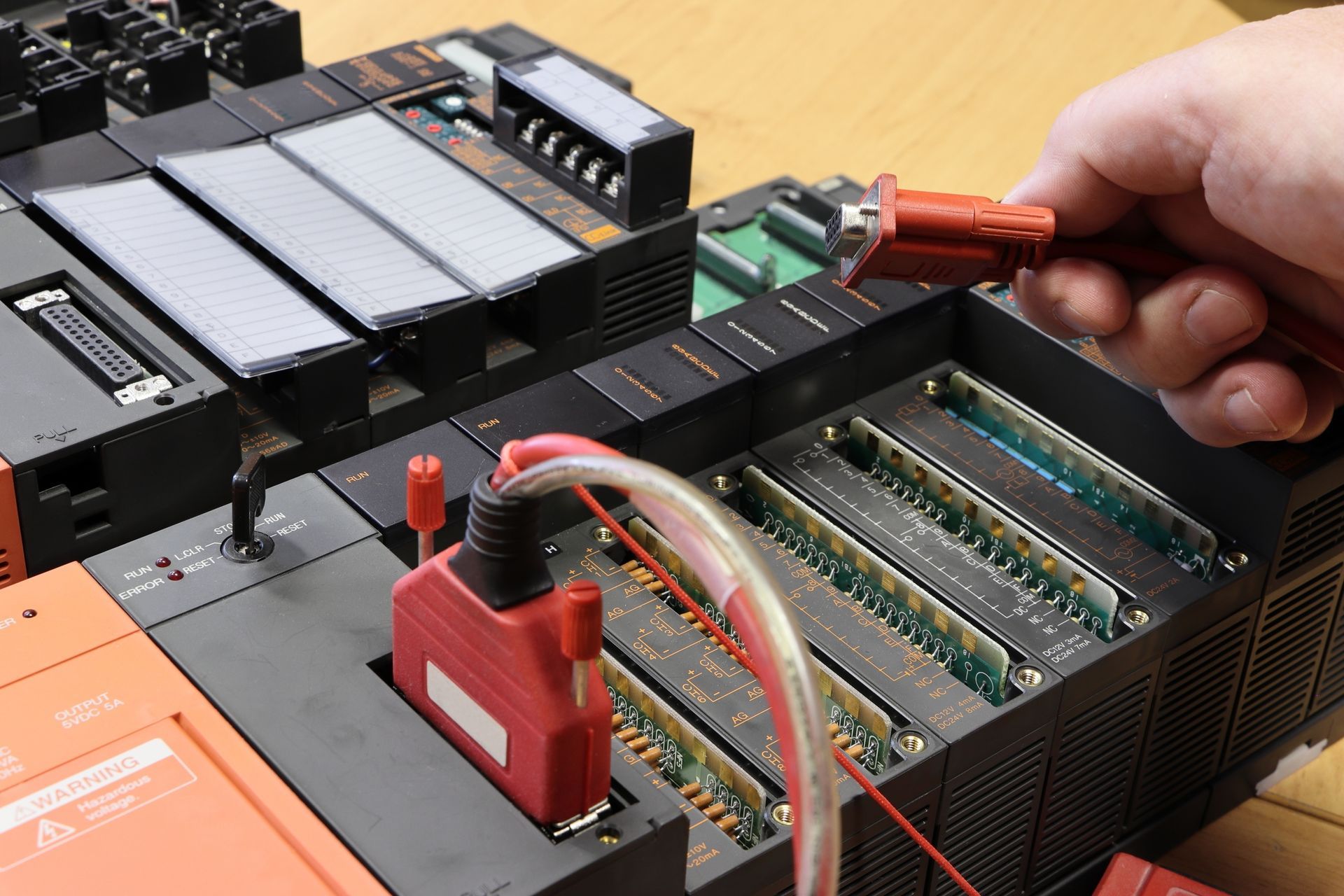
Automation projects begin with mapping current processes to identify which steps require operator judgment versus which follow repeatable logic, then selecting control hardware that communicates with field devices and interfaces with supervisory systems. Programmable logic controllers execute ladder logic or function block code that reads inputs from sensors, evaluates conditions against programmed rules, and commands outputs to control valves, motors, and alarms. The same temperature control loop a human operator once managed by watching a gauge and adjusting a valve now runs continuously, making corrections multiple times per second based on proportional-integral-derivative algorithms.
Request an automation consultation to evaluate which processes would benefit from automated control and reduced operator workload.
What Changes After Automation Implementation
Control system integration requires connecting new automation hardware to existing instrumentation, ensuring communication protocols match between devices, programming logic that handles normal operation plus exception conditions, and configuring operator interfaces that display process status clearly. Modernization projects often involve replacing relay-based control panels with programmable systems while maintaining the same field wiring to minimize downtime during cutover. Protocol converters bridge communication between legacy devices using analog signals and newer equipment speaking digital protocols like Modbus or HART.
After automation goes live, operators shift from performing repetitive manual tasks to monitoring system performance and responding to exceptions the automation can't handle independently. Batch processes that once required constant attention run through programmed recipes that control temperatures, pressures, and feed rates according to stored parameters. Startup sequences that previously took an hour of careful valve manipulation and parameter adjustment complete in minutes following automated procedures that execute steps in correct order without timing errors. Process variables hold tighter tolerances because automated controllers respond faster than human operators can read gauges and adjust settings.
Automation support includes both initial implementation and ongoing system modifications as processes change or equipment gets added. Systems designed with spare input/output capacity and modular programming accommodate future expansion without requiring controller replacement. Documentation showing how logic sequences work and which field devices connect to specific controller points becomes critical when troubleshooting failures or training new personnel.
What Property Owners Usually Ask
Industrial managers evaluating automation investments need to understand both capabilities and limitations before committing to system upgrades.
What processes benefit most from automation?
Sequences requiring precise timing, operations running during off-shifts with minimal staffing, and safety-critical procedures where human error creates significant risk justify automation investment more readily than simple on-off control or processes requiring constant operator judgment.
How does automation integrate with existing control systems?
Modern controllers communicate with legacy systems through protocol gateways that translate between different communication standards, allowing gradual upgrades without replacing functional equipment that uses older technologies still supported by automation platforms.
When should facilities consider automation upgrades?
Indicators include frequent operator errors during complex procedures, inconsistent product quality traced to manual control variability, difficulty staffing operations during all shifts, or safety incidents during startup and shutdown sequences that automation could execute more reliably.
What documentation comes with automation implementation?
Projects include electrical schematics showing field wiring connections, logic narratives describing how sequences function, input/output lists mapping field devices to controller addresses, and operator manuals explaining normal operation plus troubleshooting procedures for common faults.
Why do automation projects sometimes exceed initial budgets?
Unforeseen integration challenges appear when existing instrumentation lacks necessary communication capabilities, requiring transmitter upgrades, or when field wiring documentation proves inaccurate, extending commissioning time as technicians verify actual connections against drawings in Bossier City facilities with decades of undocumented modifications.
Redline Precision Group develops automation solutions scaled to your operational needs and budget constraints, from single-loop controllers to integrated systems managing entire processes. Schedule a site evaluation to identify automation opportunities that deliver measurable improvements in efficiency and consistency.