
Parts Made Right for Critical Tolerances
Machining Services in Bossier City for custom components, shaft repair, and precision parts unavailable through standard suppliers
Outsourcing custom parts often means waiting weeks for delivery while equipment sits disassembled and production schedules slip further behind, assuming the machined component actually arrives within specified tolerances. Redline Precision Group operates manual machining equipment in Bossier City capable of manufacturing shafts, rebuilding worn journals, cutting keyways, and producing custom brackets without the lead times or minimum order quantities that slow emergency repairs and small-run fabrication projects. The work includes turning down pump impellers to restore clearances, boring bearing housings to accept oversized components, and threading damaged fastener holes back to usable condition.
Custom machining addresses situations where replacement parts no longer exist for older equipment, original components failed due to material defects or improper heat treatment, or field modifications require adapters and mounting hardware engineered around existing equipment layouts. Precision work depends on holding tight tolerances—within thousandths of an inch—so mating surfaces align correctly and rotating components maintain balance during operation.
Our full-service machine shop is equipped to handle everything from one-off custom components to large-scale production runs. Whether supporting pump and gearbox repairs, manufacturing new shafts, machining precision bushings, trimming and balancing impellers, or rebuilding heavy equipment components, our experienced machinists deliver quality workmanship, tight tolerances, and dependable turnaround times. When equipment downtime isn’t an option, we provide the machining expertise needed to keep your operation running.
Request a quote for custom part manufacturing or component repair based on drawings, samples, or field measurements from disassembled equipment.
What Proper Machining Requires
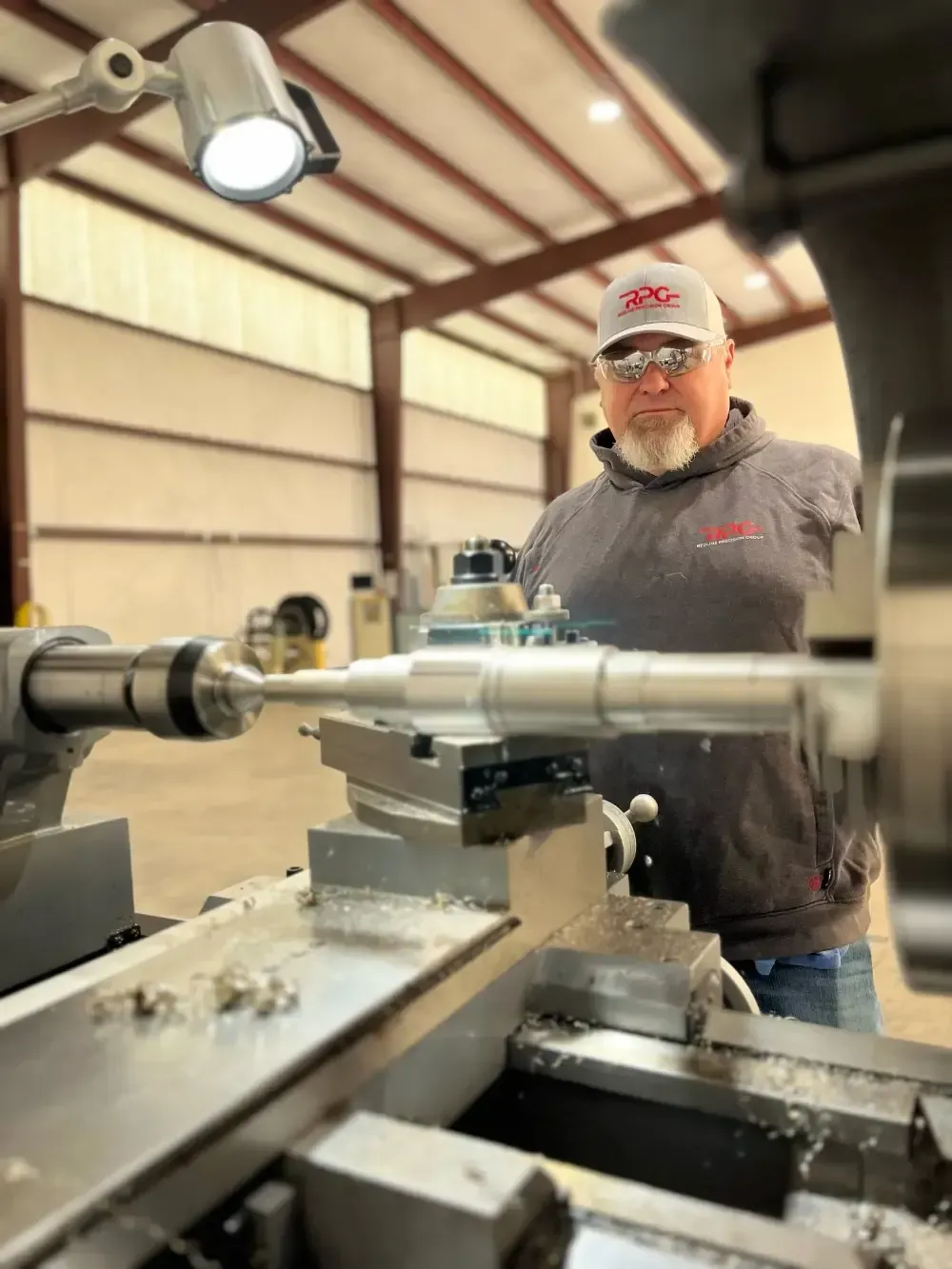
Machining work begins with material selection and dimensional verification using micrometers, calipers, and dial indicators to confirm existing component measurements before cutting begins, since worn parts rarely match original specifications shown on decades-old drawings. Operations include lathe work for cylindrical components, milling for flat surfaces and slots, drilling and tapping for threaded connections, and line boring for bearing housings that must align across multiple supports.
Completed parts fit correctly into assemblies without requiring force during installation, threaded connections engage smoothly without cross-threading, and machined journals run true without wobble when measured on a dial indicator. Shafts rebuilt through metal deposition and precision turning restore original diameters and surface finishes so bearings seat properly and seals maintain contact without leaking, extending component life back toward original service intervals rather than failing prematurely from poor fitment.
Some projects involve reverse-engineering parts from damaged samples when original drawings are unavailable, while others require modifying existing components to accept different bearing sizes, seal types, or mounting configurations. Keyway cutting and threading allow shafts and housings to be repaired rather than replaced when only small sections show wear or damage.
What Clients Need to Know
High humidity and temperature swings in Bossier City affect metal stock storage and require careful measurement immediately before machining, since thermal expansion can push dimensions outside tolerance if material temperature differs significantly from operating conditions.
What tolerances can manual machining achieve?
Skilled machinists working with properly maintained equipment hold tolerances within a few thousandths of an inch on most operations, which meets requirements for bearing fits, seal surfaces, and general industrial components, though extremely tight tolerances may require specialized tooling or CNC equipment.
How long does custom machining take compared to ordering parts?
Simple components like bushings or spacers often finish within a day, while complex multi-operation parts requiring multiple setups and finishing passes may need several days depending on material hardness and dimensional requirements, but total time typically stays shorter than vendor lead times for custom orders.
Why machine parts locally instead of using online suppliers?
Local machining eliminates shipping delays, allows direct consultation about design modifications or material substitutions, and provides faster turnaround for emergency repairs where every day of downtime costs more than the part itself.
What materials can be machined for industrial components?
The work covers carbon steel, stainless steel, aluminum, brass, bronze, and other common industrial metals, though extremely hard materials or exotic alloys may require specialized tooling or heat treatment capabilities beyond standard shop equipment.
When should worn shafts be rebuilt versus replaced?
Rebuilding makes sense when the shaft itself is difficult to source, damage is localized to specific journal areas, or the cost and lead time for a new shaft exceeds the expense of metal deposition and precision turning to restore worn surfaces.
Custom machining keeps older equipment operational when replacement parts disappear from supplier catalogs and prevents extended downtime waiting for offshore manufacturing. Redline Precision Group handles both emergency component fabrication and planned custom work—contact us to discuss specific machining requirements and review options for parts currently delaying your repairs.