
Systems That Respond Exactly When Needed
Instrumentation and Controls in Bossier City for facilities requiring continuous pressure, flow, temperature, and level monitoring
Redline Precision Group installs, calibrates, and maintains industrial instrumentation systems in Bossier City and throughout Louisiana's energy corridor. Facilities relying on real-time data to control processes depend on sensors and transmitters that deliver accurate readings under demanding conditions. When instrumentation drifts out of calibration or fails completely, operators lose visibility into what's happening inside vessels, pipelines, and reactors—forcing shutdowns or creating unsafe operating conditions.
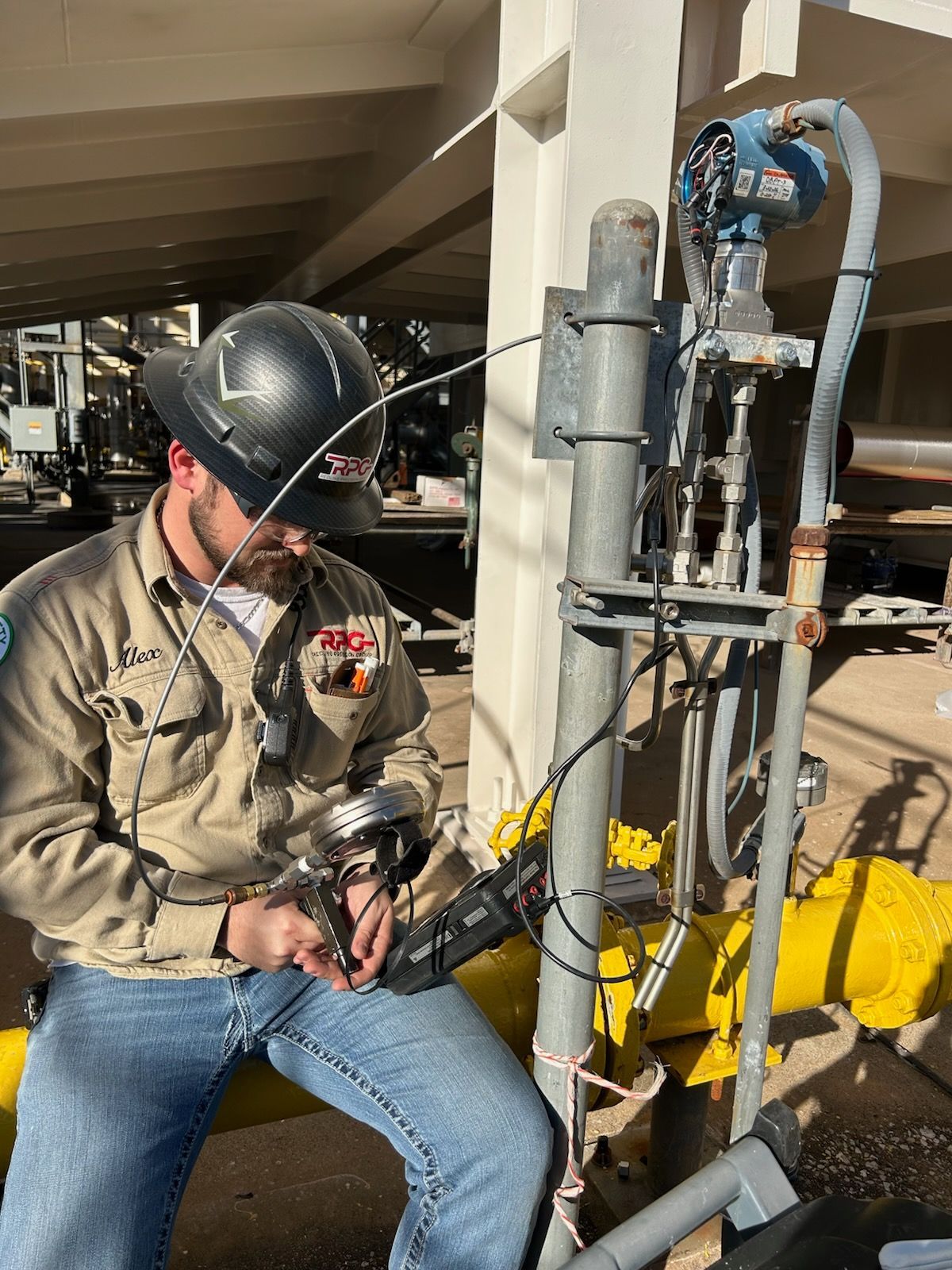
Instrumentation and controls work involves installing field devices that measure physical properties, wiring those devices into control panels, configuring controllers to respond to specific thresholds, and calibrating each component to match process requirements. In refineries and chemical plants, temperature transmitters must hold tolerances within fractions of a degree while exposed to thermal cycling, vibration, and corrosive atmospheres. Flow meters measuring custody transfer need calibration traceable to national standards because measurement errors translate directly into revenue discrepancies.
Schedule an on-site assessment to evaluate current instrumentation performance and identify calibration needs.
What Proper Instrumentation Actually Accomplishes
Control systems rely on three components working together: sensors that measure current conditions, controllers that compare readings against setpoints, and final control elements like valves that adjust process variables. When a pressure transmitter sends a 4-20 milliamp signal representing tank pressure, the controller interprets that signal and decides whether to open or close an inlet valve. If the transmitter is out of calibration by even two percent, the controller makes decisions based on incorrect information, leading to overfilled tanks, starved downstream processes, or safety system trips.
After instrumentation installation or recalibration, operators notice that process variables hold steady within tighter bands, alarms trigger at appropriate thresholds rather than prematurely or too late, and automated sequences complete without intervention. A properly calibrated level transmitter prevents overflow incidents not by adding new functionality but by reporting the actual liquid height instead of a value offset by drift or zero shift. Control loops that previously oscillated or hunted stabilize because the feedback signal now matches reality.
Instrumentation work also includes troubleshooting failures that stop production. A failed temperature sensor might present as a process control problem when the actual issue is a broken thermowell, corroded wiring, or a transmitter damaged by voltage spikes. Diagnosing the root cause quickly requires understanding both the electrical signals and the process conditions that affect sensor performance. Redline Precision Group supports both planned calibration schedules and emergency repairs when instrumentation failures threaten uptime.
Common Questions About This Service
Industrial facilities in Bossier City often ask how instrumentation affects both compliance and day-to-day operations.
What happens during instrumentation calibration?
Technicians compare the device output against a known standard across its full operating range, adjust internal settings to correct any drift, and document the results with before-and-after readings that demonstrate accuracy.
How do environmental conditions affect instrument performance?
Heat, humidity, vibration, and corrosive atmospheres common in Gulf Coast industrial facilities accelerate calibration drift and cause premature failure of electrical connections, requiring more frequent inspection intervals than manufacturers' baseline recommendations suggest.
When should instrumentation be replaced rather than repaired?
Devices with obsolete communication protocols, components no longer supported by manufacturers, or housings corroded beyond safe use justify replacement even if they still produce a signal, because unreliable instrumentation creates bigger costs downstream.
What's included in a typical instrumentation installation?
Installation covers mounting the device, running signal and power wiring to the control panel, configuring addresses or tags in the control system, performing initial calibration, and verifying that alarms and interlocks respond correctly during functional testing.
Why do some instruments fail more frequently than others?
Devices installed in high-vibration locations, exposed to temperature extremes, or measuring abrasive or coating fluids experience accelerated wear on sensing elements and require either more robust models or protective measures like thermowell upgrades and impulse line heat tracing.
Redline Precision Group provides both planned instrumentation upgrades and rapid response when failed devices threaten production schedules. Request a consultation to review system reliability and develop a calibration strategy that aligns with your operational requirements.