
Machinery That Runs Without Interruption
Rotating Equipment in Bossier City for pumps, motors, and machinery experiencing vibration, wear, or alignment issues
Imbalance in a centrifugal pump shows up first as increased vibration felt through mounting pads and piping supports. Redline Precision Group diagnoses and repairs rotating equipment throughout Bossier City's industrial facilities, addressing problems like shaft misalignment, bearing wear, and impeller damage before they escalate into catastrophic failures. Facilities running continuous processes can't afford unplanned downtime when a motor seizes or a pump loses prime during peak demand periods.
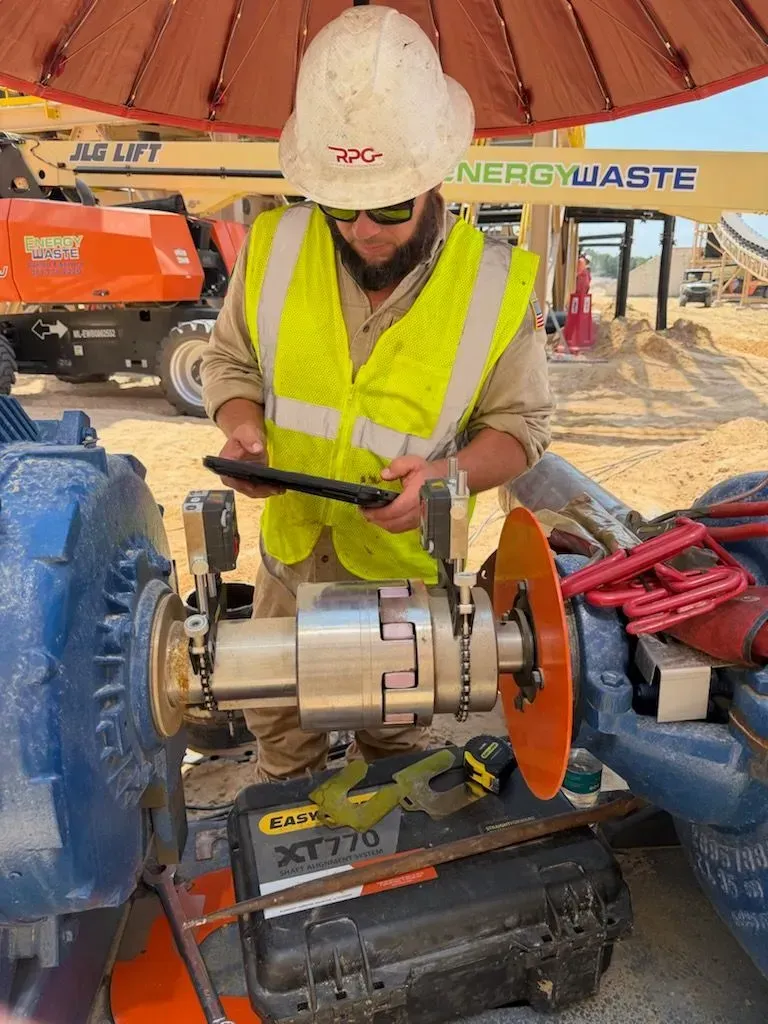
Rotating equipment service includes vibration analysis to detect imbalance and misalignment, bearing inspection and replacement, shaft alignment using laser tools that measure angular and parallel offset, and balancing procedures that redistribute mass on rotating components. A motor operating with just five thousandths of an inch of misalignment generates excessive radial loads on bearings, shortening their service life from years to months. Alignment work corrects both the angular relationship between coupled shafts and the offset between their centerlines, measured while equipment is at operating temperature because thermal expansion changes dimensions.
Arrange an equipment inspection to identify wear patterns and alignment deviations before they cause unplanned shutdowns.
How Rotating Equipment Maintenance Prevents Failures
Preventive maintenance for rotating machinery focuses on components that wear predictably: bearings that support radial and thrust loads, seals that prevent leakage, and couplings that transmit torque between driver and driven equipment. Bearing failures announce themselves through rising temperatures, increased vibration at specific frequencies, and metallic debris in lubrication oil. Catching these indicators early allows scheduled replacement during planned outages rather than emergency repairs that halt production.
After completing rotating equipment maintenance, operators notice smoother operation with vibration readings dropped into normal ranges, reduced energy consumption because mechanical losses decrease when components run true, and elimination of the rhythmic noise that accompanies imbalanced or misaligned machinery. A properly aligned pump coupling no longer generates the characteristic thumping sound at twice running speed, and motor current draw drops when shaft loads return to design values. Equipment that previously required constant monitoring runs reliably within automated control sequences.
Service work includes both in-shop rebuilds where equipment is disassembled completely and field repairs performed on installed machinery using portable alignment and balancing tools. The choice depends on equipment condition, available outage windows, and whether supporting systems like baseplates and foundations meet specifications. Some alignment problems trace back to distorted baseplates or grouting voids rather than the equipment itself.
Answers to Frequent Service Questions
Maintenance teams managing critical rotating equipment often need to understand what drives service intervals and repair decisions.
What causes vibration to increase suddenly in rotating equipment?
Sudden vibration changes typically indicate debris impact damage to impellers, loosened mounting bolts allowing equipment to rock on its base, bearing failures that increase clearances, or coupling deterioration that creates dynamic imbalance during operation.
How is shaft alignment measured accurately?
Laser alignment tools project beams between brackets mounted on each shaft, measuring angular and parallel offset in both vertical and horizontal planes while technicians rotate the shafts through multiple positions to account for shaft runout and coupling face variations.
When should bearings be replaced based on vibration data?
Bearings showing vibration acceleration above manufacturer alarm thresholds, elevated temperatures compared to baseline readings, or distinct tones at bearing defect frequencies justify replacement even if they haven't reached calculated L10 life, because these indicators precede imminent failure.
What's included in a typical pump rebuild?
Complete rebuilds involve disassembly, inspection of all wetted components for erosion and corrosion, bearing and seal replacement, impeller balancing, shaft runout verification, reassembly with new gaskets and hardware, and performance testing against the original curve.
Why do some facilities in Bossier City experience shorter bearing life?
High ambient temperatures and humidity accelerate lubricant degradation, while airborne contaminants from nearby industrial processes infiltrate bearing housings through inadequate sealing, introducing abrasive particles that score bearing races and reduce service intervals below manufacturer predictions.
Redline Precision Group supports both emergency repairs and planned maintenance programs designed around your equipment criticality and operating demands. Contact our team to develop a rotating equipment strategy that extends asset life and reduces unplanned downtime.